
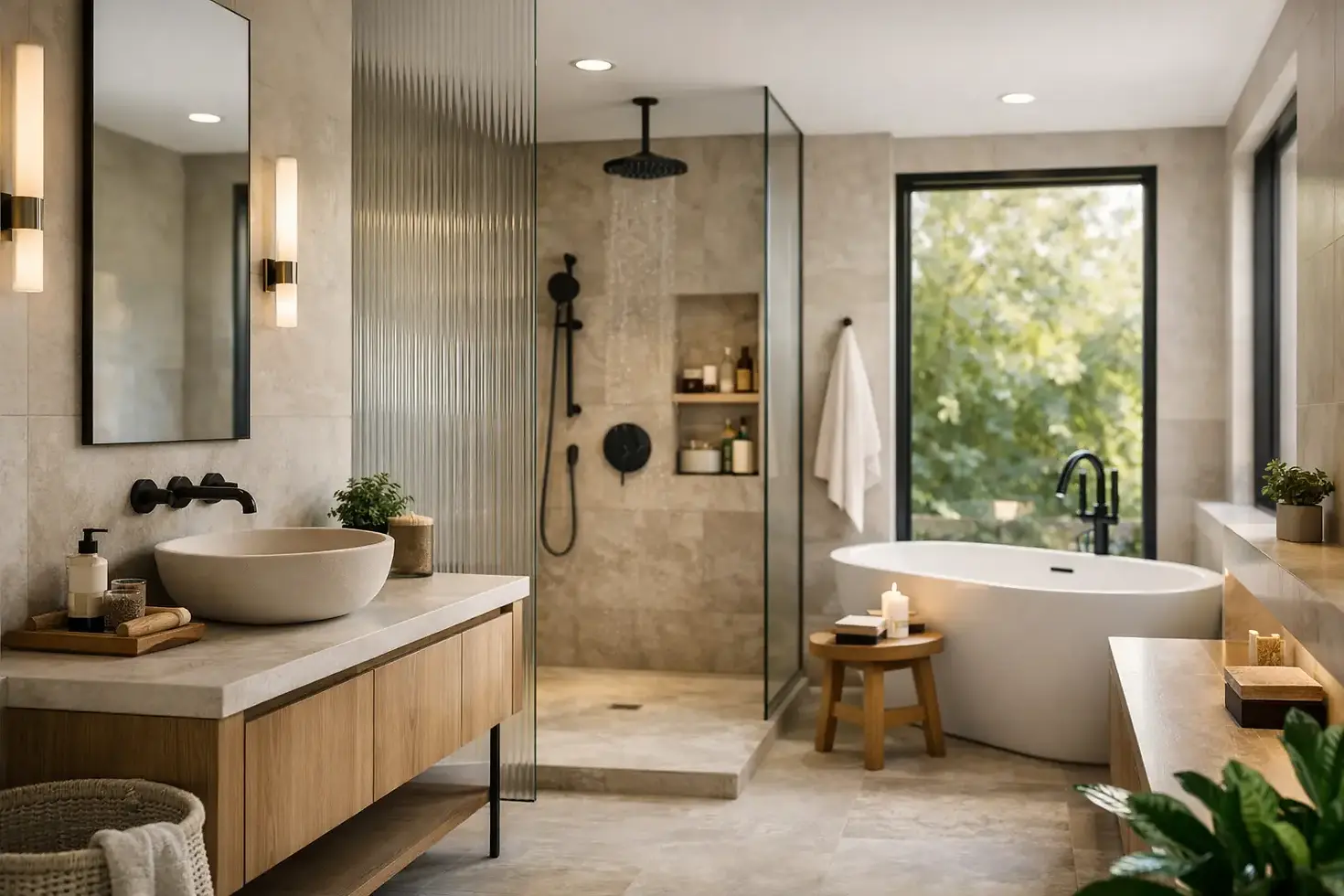
Bathroom Design Trends 2026 That Work Harder

A bathroom remodel can look current on day one and feel dated long before the grout has fully cured. The bathroom design trends 2026 homeowners should pay attention to are less about chasing a showroom look and more about making a busy room easier to clean, better lit, and built to last. That is good news for Dayton-area homeowners and rental property owners who want upgrades that hold up to real daily use.
The strongest direction for 2026 is practical comfort. Expect warmer finishes, more thoughtful storage, improved accessibility, and materials selected for performance as much as appearance. A successful bathroom does not need every trend. It needs a coordinated plan that fits the home, the budget, and the people using it.
Bathroom Design Trends 2026: Comfort With a Purpose
Bathrooms are becoming more personal, but not necessarily more complicated. Homeowners are moving away from cold, all-white spaces with limited storage and harsh overhead lighting. Instead, they are choosing rooms that feel calmer while handling the predictable mess, moisture, and traffic that come with everyday life.
For a primary bathroom, that may mean a larger shower with a built-in niche, a double vanity with drawers, and lighting that works for both early mornings and winding down at night. In a hall bath or rental unit, it may mean a durable vanity, a tub surround that is easy to maintain, and fixtures that can be repaired without tracking down specialty parts.
The right choices depend on the property. A high-end feature can make sense in a long-term family home, while a straightforward, durable finish package may deliver better value in a rental turnover.
Warm Neutrals Replace Stark Gray
Cool gray finishes dominated bathrooms for years, but warmer neutrals are taking their place. Think soft beige, sand, taupe, clay, mushroom, and warm white. These colors work especially well with natural-look wood tones, brushed nickel, matte black, and aged brass hardware.
The goal is not to make every bathroom brown or beige. It is to create a room that feels less sterile. A warm off-white wall color, a light oak vanity, or a stone-look porcelain floor can bring that balance without making the space dark.
For smaller bathrooms, keep the major surfaces light and use warmer color through the vanity, paint, towels, or accent tile. Darker tile can look sharp, but it may show water spots, soap residue, and dust more quickly. That trade-off matters in homes with hard water, active families, or frequent tenant turnover.
Natural Materials, Used Wisely
Wood tones, textured tile, and stone-inspired surfaces are popular because they add character without relying on busy patterns. Real wood and natural stone can be beautiful, but bathrooms are hard on both materials. Moisture, cleaning products, and poor ventilation can lead to staining, swelling, or extra maintenance.
Porcelain tile, quartz countertops, and quality moisture-resistant vanity materials often give homeowners a similar look with fewer upkeep concerns. The best material is not always the most expensive one. It is the one that fits the room's moisture level, maintenance needs, and intended lifespan.
Showers Become the Main Event
Tub-to-shower conversions remain one of the most requested bathroom upgrades, especially in primary baths and homes where the existing tub is rarely used. In 2026, the focus is on showers that feel open and work better: low thresholds, larger formats, practical shelving, and fixtures placed for comfortable daily use.
Frameless glass remains popular, but it is not the only good option. A fixed glass panel can create an open look with less hardware and fewer areas to clean. A shower curtain may still be the smartest choice for a secondary bath, a rental, or a budget-conscious renovation. It is inexpensive, simple to replace, and easier to manage than glass in a high-use space.
Large-format wall tile is also gaining ground because it reduces grout lines. Fewer grout lines generally mean less routine cleaning, although large tile requires careful wall preparation and experienced installation. If the walls are not flat or the layout is rushed, large tile can expose imperfections rather than hide them.
Built-In Niches and Benches Need Planning
A shower niche keeps bottles off the floor and reduces clutter around the tub or shower ledge. It is a useful upgrade, not just a design detail. The niche should be sized around the products people actually use and placed where it will not interfere with plumbing or the tile layout.
Benches are another popular feature, but they take up valuable shower space. They make the most sense in larger showers, accessible designs, or homes where comfort and aging in place are priorities. In a compact shower, a properly located grab bar or a removable teak seat may offer better function without crowding the room.
Better Lighting Makes Every Finish Look Better
One overhead fixture is rarely enough. Bathrooms need layered lighting: general light for the room, focused light at the vanity, and optional accent or night lighting for comfort. This is one of the most practical bathroom design trends 2026 has carried forward because it improves how the room functions every single day.
Wall-mounted vanity lights or vertical fixtures placed near the mirror can reduce shadows on the face. That matters when shaving, applying makeup, or getting ready for work. A dimmable ceiling fixture gives flexibility, while a separate low-level light can make nighttime trips safer without flooding the room with bright light.
Electrical upgrades should be planned early. Moving a light, adding a fan, or installing a new outlet is much easier before drywall and tile are finished. It also gives the contractor a chance to confirm that GFCI protection, venting, and circuit capacity are handled correctly.
Storage Looks Cleaner When It Works Harder
Open shelves can look good in a staged photo, but they often become cluttered in a working bathroom. Drawers, recessed medicine cabinets, tall linen storage, and vanity organizers are more useful for most homes.
Vanities with deep drawers are particularly helpful because they keep toiletries accessible without forcing people to dig through a dark cabinet. For a shared bathroom, consider separate storage zones so daily items do not end up covering the countertop.
Wall-hung vanities are still on trend and can make a small bathroom feel more open. They also simplify floor cleaning. However, they require secure wall blocking and may offer less storage than a standard cabinet vanity. For a family bath or rental, a well-built floor-mounted vanity may be the more durable choice.
Accessibility Becomes Part of Good Design
Accessible features no longer have to make a bathroom feel clinical. Low-curb showers, wider clearances, lever-style handles, handheld showerheads, comfort-height toilets, and reinforced walls for future grab bars can blend into a modern remodel.
Planning for these details during renovation is typically far less disruptive than adding them after a fall, injury, or mobility change. Even homeowners who do not need accessibility features now may appreciate a bathroom that supports long-term use.
A curbless shower is appealing, but it requires careful floor slope, waterproofing, and drain planning. It may not be practical in every existing home without additional structural work. A low-threshold shower can provide much of the same convenience with a simpler installation.
Durable Details Matter More Than Trendy Fixtures
The finish of a faucet gets attention, but the quality of its internal parts matters more over time. Choose fixtures from established manufacturers with readily available replacement cartridges and parts. This is especially important for landlords and property managers who need fast repairs when something wears out.
Matte black remains a popular choice, while brushed nickel continues to be one of the safest, most flexible finishes for Dayton homes. Brushed brass can add warmth, but it works best when the rest of the bathroom supports it. Mixing metals can look intentional, yet it needs a clear plan. Randomly combining finishes often reads as unfinished rather than custom.
Ventilation deserves the same attention as tile and fixtures. A properly sized, correctly vented exhaust fan helps protect paint, drywall, trim, and cabinetry from recurring moisture damage. It is a behind-the-scenes upgrade that can prevent expensive repairs later.
Build the Bathroom Around Daily Life
Before selecting tile, decide what needs to change about the way the room works. Maybe the problem is a leaking shower valve, poor ventilation, no usable storage, cracked flooring, or a layout that creates a morning traffic jam. Those issues should shape the renovation plan.
A well-managed remodel coordinates plumbing, electrical, drywall, flooring, painting, and finish installation in the right order. NovaCraft Construction helps Dayton-area property owners approach bathroom updates with that full-picture mindset, from needed repairs to value-adding renovations.
The most lasting trend is simple: choose a bathroom that serves the property well after the latest colors and fixture finishes have changed. Start with sound plumbing, proper waterproofing, reliable ventilation, and a layout that makes daily routines easier. The style choices will have a much better foundation to stand on.


Comments